 |
| Near-final 'hammerhead' design for the USS Enterprise in Star Trek: Final Frontier |

Friday, March 6, 2015
Star Trek: Final Frontier - the animated web series that could have been

Saturday, January 31, 2015
Project: Potemkin releases "We Few..."
The Star Trek fan series Project: Potemkin has released their latest vignette, entitled 'We Few..."
Continuing with their tradition of character-driven stories, a shuttlecraft from the Potemkin crash lands on an inhospitable world. Can Commander Delaney and the others survive until their rescue?
The episode can be seen on YouTube below:
Continuing with their tradition of character-driven stories, a shuttlecraft from the Potemkin crash lands on an inhospitable world. Can Commander Delaney and the others survive until their rescue?
The episode can be seen on YouTube below:
Tuesday, December 9, 2014
Book Review: Frank Herbert's 'Dune'
 |
| Poster art from the 1984 film adaptation of 'Dune' |
Dune is hailed by many as an unparalleled work of science fiction. I've recently finished reading the novel for the first time, and give my thoughts and observations about this epic story.
Friday, December 5, 2014
Star Trek's first pilot began filming 50 years ago this week
 |
| image courtesy of TrekCore |
Sunday, November 30, 2014
New 'Star Wars' trailer released!
The much-anticipated trailer for Star Wars: The Force Awakens was released on the Web earlier this week, giving fans a look at the first film in the new Disney Star Wars trilogy.
Wednesday, August 20, 2014
Starship Farragut releases 'Conspiracy of Innocence'
Starship Farragut is a professionally-produced fan series set during the time of TOS. Since 2007, four full-length, live-action episodes have been released, as well as several vignettes, animated productions and comics.

Farragut's latest offering, 'Conspiracy of Innocence', takes us to an underground city where, during a first contact mission, the landing party finds their perceptions of reality challenged by a xenophobic race.
I have mixed feelings about 'Conspiracy'. One of my biggest issues with the show is that the mystery of what's going on is revealed way too early, making the rest of the episode a bit predictable. On the other hand, the story has a very TOS feel to it, which is complimented nicely by the modern widescreen aspect ratio and CG special effects.
The complete episode can be viewed on YouTube below:
The complete episode can be viewed on YouTube below:
Thursday, July 31, 2014
'Prelude to Axanar' released!

Star Trek: Axanar is probably one of the most highly-anticipated, professionally-produced fan films currently in the works. After the release of an official trailer back in June, a short prelude film, Prelude to Axanar, come out earlier this week.
The docu-drama style short introduces us to the world of Axanar, which is set some 20 years prior to TOS during a time of war between the Federation and the Klingon Empire. It's a race for technological and space superiority, with the fate of the Federation itself hanging in the balance.
The film can currently be viewed as an embedded video on the Axanar Kickstarter page. Scroll down to the second video from the top.
UPDATE: the film is also now available in HD on the Axanar YouTube channel.
Monday, June 16, 2014
Incredible new trailer for highly anticipated 'Prelude to Axanar' released!

The first official trailer for the professionally-produced fan film Star Trek: Axanar has been released! The docu-drama-style trailer, which gives us a sneak-peak at the project's introductory short film Prelude to Axanar, is filled with plenty of eye-candy and intrigue.
“Axanar” takes place 21 years before the events of “Where no Man Has Gone Before”, the first Kirk episode of the original Star Trek. Axanar is the story of Garth of Izar, the legendary Starfleet captain who is Captain Kirk’s hero. Kirk himself called Garth the model for all future Starfleet Officers. Garth charted more planets than any other Captain and was the hero of the Battle of Axanar, the story of which is required reading at the academy. This is that story.
“Axanar” tells the story of Garth and his crew during the Four Years War, the war with the Klingon Empire that almost tore the Federation apart. Garth’s victory at Axanar solidified the Federation and allowed it to become the entity we know in Kirk’s time.
It is the year 2245 and the war with the Klingons ends here.
If this new trailer is any indication, Axanar has the potential to be one of the best, if not the best, fan productions to date. The film could also very well prove that high quality sci-fi is no longer limited to major studios. Series like Star Trek: Phase II and Star Trek Continues have already more than shown this to be feasible, but this film could very well take it to a whole new level.
Thursday, May 8, 2014
Starship Exeter releases long-awaited final Act of 'The Tressaurian Intersection'
After an eight-year hiatus, Starship Exeter's 'The Tressaurian Intersection' has finally been completed!
Starship Exeter follows the adventures of the new crew of the starship Exeter, which originally appeared in the TOS episode 'The Omega Glory'. Filmed in 2004 and released in segments over the next several years, Act III of 'The Tressaurian Intersection' left viewers with a massive cliff-hanger that wasn't resolved until last week.
If you've never seen this classic fan production (or its new epic conclusion) before, check it out on YouTube below. Although, to my knowledge, no further episodes will be produced, the show has clearly set a high standard for anyone entering the Star Trek fan film business. It's also a great example of a 'dead' production brought back to life, something that often doesn't happen with projects such as this.
"Space. Endless. Silent. Waiting. This is the new odyssey of the starship Exeter..."
 |
| GIF courtesy of www.thelogbook.com |
"Searching for a starship in distress, the crew of the Starship U.S.S. Exeter finds a destroyed starbase and a deepening mystery. Has an enemy species from Captain Garrovick's past invented the ultimate weapon, or is the truth even stranger and more deadly?"A major improvement over the series pilot, 'The Savage Empire', 'The Tressaurian Intersection' has, for years, been widely praised by fans for its quality, production values, and excellent writing. And rightly so. This episode has managed to capture the 'feel' of TOS so well that one may forget they're watching a fan-produced show.
If you've never seen this classic fan production (or its new epic conclusion) before, check it out on YouTube below. Although, to my knowledge, no further episodes will be produced, the show has clearly set a high standard for anyone entering the Star Trek fan film business. It's also a great example of a 'dead' production brought back to life, something that often doesn't happen with projects such as this.
"Space. Endless. Silent. Waiting. This is the new odyssey of the starship Exeter..."
Thursday, February 20, 2014
5 Apps for keeping your PC lean, mean, and infection-free

Let's face it: the Internet is a dangerous place.
In this case, I'm not referring to cyber crime, but cyber security. Even the best-informed can get into trouble with a single click. One bad file has the potential to turn a system into a useless paperweight. One could go out and spend considerable money on an Internet security suite, or piece together your own from the best free apps on the Web. In concert, the following five apps not only provide excellent virus/malware protection, but also keep your system running smoothly.
Avast! Free Antivirus
Like many anti-virus programs, Avast has had its ups and downs over the years, but it's currently one of the best free options out there. Boasting a Windows-8-style 'tile' interface, Avast! Free is comprised of a number of modules, or 'shields', to protect different aspects of your computer. These can be configured/disabled individually depending on the user's needs. Notable features include boot-time scan, real-time scan, virus chest, and audible warnings. Although completely free, the program must be re-registered every year by obtaining a free key from Avast.
In addition to the desktop version, Avast also offers a mobile security suite for Android.

Malwarebytes Anti-Malware
Malwarebytes is considered by many to be the best free anti-malware tool on the Web. It's known for being able to detect malware that others programs miss. The free version allows users to scan for and remove malware from a simple, no-frills interface. The paid version takes that step farther with real time protection, scheduled scans, and a flash memory scanner.
An Android app is also available.

Comodo Free Firewall
A firewall is a must-have for any computer with an Internet connection. At its core, a firewall prevents unauthorized parties from accessing a computer from an outside network, such as the Internet (or vice versa). Comodo may not be the best, but it's a solid option that's more than sufficient for the average user. In fact, Comodo's many personalized security alerts may get tiring after a while, but that's a small price to pay for system security. Originally part of a larger Internet security suite, Comodo Firewall can now be downloaded as a separate application.

IObit Smart Defrag
Although not strictly a 'security' application, IObit's Smart Defrag is a great alternative to the Windows Disk Defragmenter. It can help to speed up a system's file access by clumping together bits of data that are part of the same file, but strewn across the hard drive. Considered 'the world's fastest defragmenting engine', Smart Defrag can be setup to run in the background automatically (when a system is idle), at boot, or manually by the user.

Piriform CCleaner
From a security standpoint, CCleaner is a great utility for clearing browser history and Internet temp files, which can not only eat up large amounts of drive space, but also harbor infections. CCleaner can also remove unwanted registry keys, although this isn't recommended unless you're comfortable editing the registry.

DISCLAIMER: It goes without saying that these aren't the only options available. There are plenty of other pieces of free software that may do the job just as well or perhaps better. I'm not an expert in system security, and make no guarantees that this collection of programs will prevent all infections. However, if you're looking to bolster your defenses or are installing security software for the first time, I've had great success using these myself.
Tuesday, February 11, 2014
ST Continues releases message-heavy 'Lolani'

In this installment, "a survivor from a distressed Tellarite vessel puts Captain Kirk and his crew into a moral quandary over her sovereignty."
Although the plot may not be original, the delivery is excellent, leaving the viewer wondering about the moral implications of slavery. With several other themes such as love, freedom, and justice, this tale would have fit right in amongst Classic Trek's not-so-subtle message stories.
Like its predecessor, 'Pilgrim of Eternity', 'Lolani' is a great episode in almost every respect. The show's sets, props, and special effects are all top-notch, while remaining faithful to The Original Series. The acting and characterizations are spot on. Even the two alien ships appearing in the production look like they could have been designed in the '60's. The producers have clearly learned from other fan series, releasing two high-quality shows right off the bat.
Not only does 'Lolani' explore an age-old issue in-depth, but also presents us with several strong female characters to offset the male leads. Besides Lolani herself, we also have the new ship's counselor, Dr. McKennah, who's clearly not afraid to stand up to her captain.
The episode also features several former sci-fi stars, including Lou Ferrigno (The Incredible Hulk) and Erin Gray (Buck Rogers in the 25th Century).
After a successful Kickstarter campaign, Star Trek Continues now has the funding for three additional episodes. New to the series? Check out STC's previous show 'Pilgrim of Eternity' and three short vignettes.
Friday, January 31, 2014
'Project: Potemkin' releases 'The Night the Stars Fell from the Sky'

The show centers around the exploits of veteran Starfleet captain Alec Grigory and the starship Potemkin. The last Constitution class ship still in service, the vessel has a unique crew of mostly inexperienced offers who continue the tradition of going boldly.
Filmed in Southwest Georgia (US), Project: Potemkin has released eight short vignettes and two full-length episodes. Although not on the same 'level' as many professionally-produced series, the show is definitely worth checking out.
Project: Potemkin's latest release is 'The Night the Stars Fell from the Sky'. After discovering M-rays on a primeval world, the crew must unravel the dark secrets of the planet's inhabitants.
'Night', overall, is a very solid episode that nicely ties in with established Original Series cannon. The fact that Potemkin's officers are supposed to be inexperienced is clearly reflected by the actions of this episode's central Vulcan character, Ensign T'Noshi. Although the acting across the board feels a bit stiff at times, it gets the job done.
The episode's sets and special effects are, for the most part, well-done for a fairly low-budget production. The ship's bridge feels a bit cramped, but showcases a nice blend of TOS and movie-era tech. Planet-side, the show makes use of greenscreen (combined with real-world footage) to create background imagery and the large-scale structures. The end result is fairly convincing. Space shots of the ship and planet are also CG; it's by no means high end, but adequate.
The uniforms worn by the crew are a bit of a TOS or Motion Picture throwback, not at all resembling the militaristic, maroon uniforms introduced in Star Trek II. It was good to see, however, that all the officers were finally given Starfleet chest insignia, something that was absent in previous episodes. Using these 'simplified' uniforms instead of the much more complex movie versions was clearly a cost-saving measure, but it really doesn't take away from the show.
The moral decision at the center of this episode is one that's been used many times before to great effect, and was just as effective here. My only real complaint was the captain's stance on this issue near the end of the episode. Although, to some degree, he rectified this in the final moments of the show, irreparable damage was already done. It's interesting to compare this to other similar situations in Trek, if for no other reason than to see the other side of the coin.
Despite Project: Potemkin's limited resources, the show is very watchable and a highly-respectable fan effort. As long as you're not expecting a Phase II-quality production, this is definitely worth taking a peek at.
Interested in writing a screenplay? Potemkin is currently accepting script submissions, something you won't find with many other productions.
'The Night the Stars Fell from the Sky' and previous installments can be viewed or downloaded here.
Wednesday, January 29, 2014
Tech Tutorial: Change a Video's Aspect Ratio Using VirtualDub

VirtualDub is a "video capture and video processing utility for Microsoft Windows...designed to process linear video streams, including filtering and recompression." If you need to convert those pesky files but don't want to pay for it, this is a quick and easy solution.
At first glance, VirtualDub isn't much to look at, and doesn't appear very user-friendly. Don't let this discourage you -- VirtualDub is a powerful tool that gets the job done, and is quite usable even if you're not a multimedia expert. Just bear in mind that VirtualDub is not a general-purpose video editor; instead, it provides a few key tools to aid in your editing endeavors.
- Download VirtualDub and extract the files from the zip archive. Launch the application (it's self-contained and requires no installation).
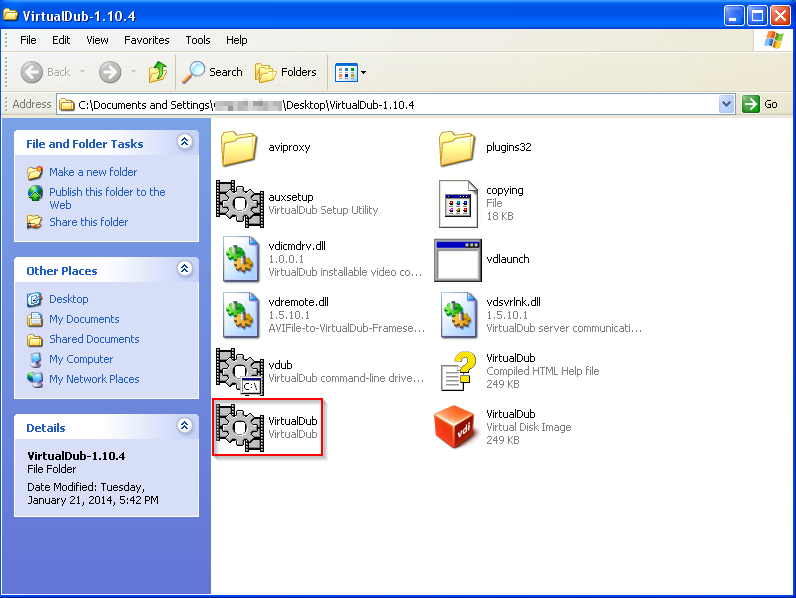 |
| VirtualDub folder. |
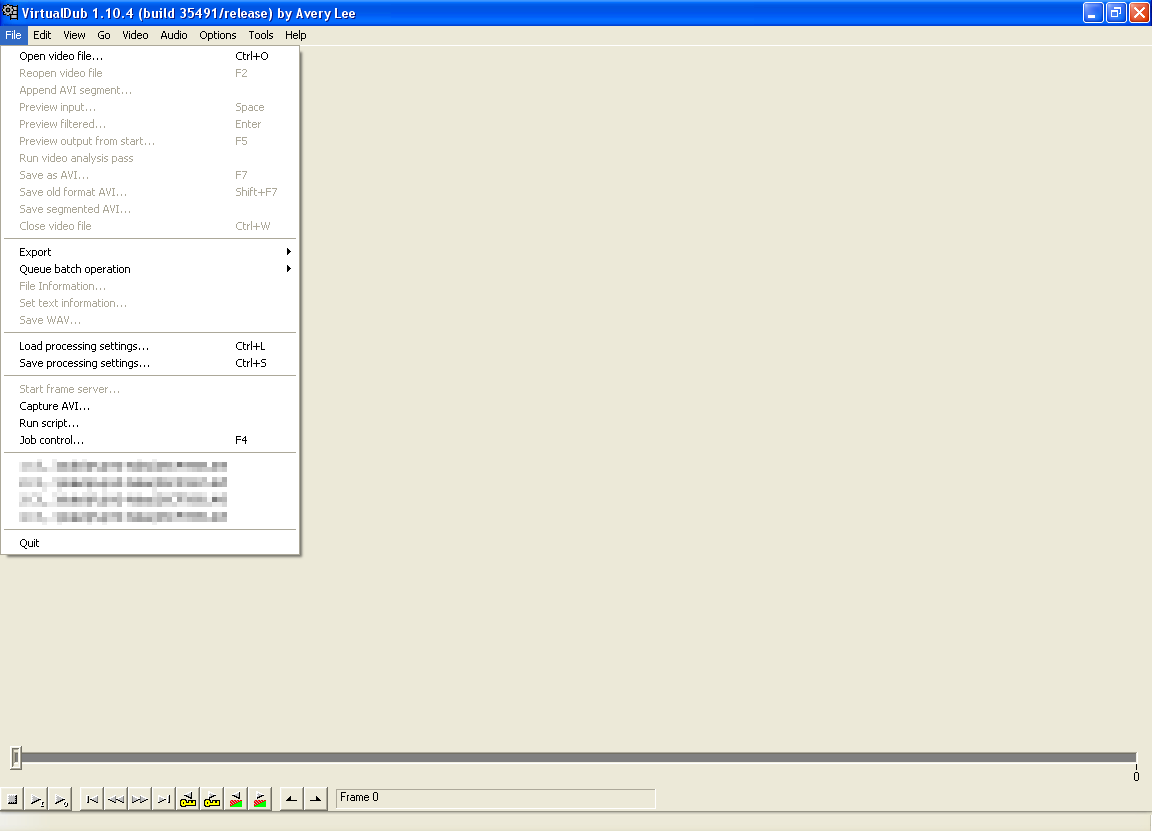 |
| VirtualDub main window prior to video import. |
- Go to 'Video' > 'Filters'.
- Click 'Add'. A new window will appear with a list of various filters. Scroll down to near the bottom of the list and select 'resize'. Click 'OK'.
 |
| 'Add Filter' window. |
- Another new window will appear. Under 'Framing Options', click 'Crop to aspect ratio' and enter your desired aspect ratio (16:9, 4:3, etc.) in the fields below. Click 'OK'.
- Note that selecting one of the letterbox options will add black bars to the top and bottom of your video.
- Inputting your desired pixel size in the 'Size Options' section allows you to manually crop a video beyond standard aspect ratios.
 |
| 'Framing Options' window. |
- To compress your video, go to 'Video' > 'Compression' and select your desired compression codec. Click 'OK'.
- Choosing to leave your videos uncompressed will result in very large file sizes.
- Generally, the first DivX option is a good choice, but note that the codec you wish to use must already be installed on your computer.
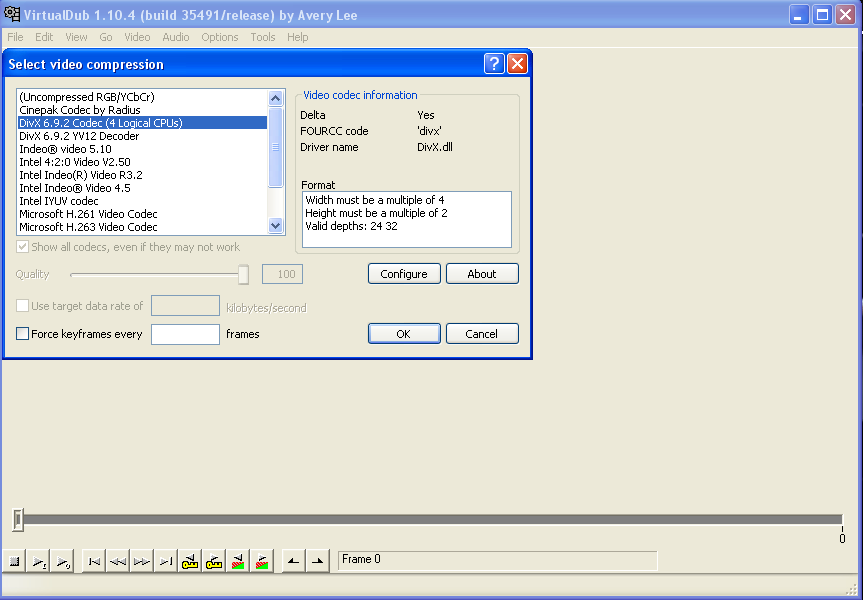 |
| 'Video Compression' window. |
- Click 'File' > 'Open Video File' to import your clip.
- If you're working with MPEG-4 files, download this unofficial Ffmpeg Input Driver (as the program does not support this format out-of-the-box).
- Open either the 32 or 64-bit folder (check your version of Windows) and copy the contents into the 'plugins32' (or 'plugins64') folder of the VirturalDub directory.
- In addition, if your video is encoded in H.264, this codec will allow you to open the file and save it without any DivX errors.
- After the video has been imported, you may find that the video is too large for the window. Simply right click on it and select 25% to reduce the size. In doing this, a second video window will also become visible. Select 25% for this second window.
- The window on the left displays your original video, while the one on the right shows what it will look like after conversion.
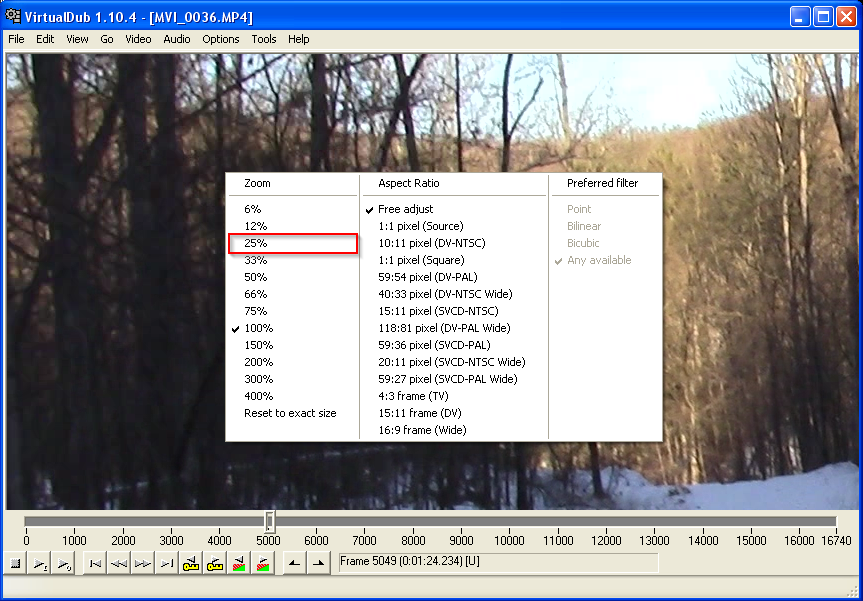 |
| Resizing the left video window. |
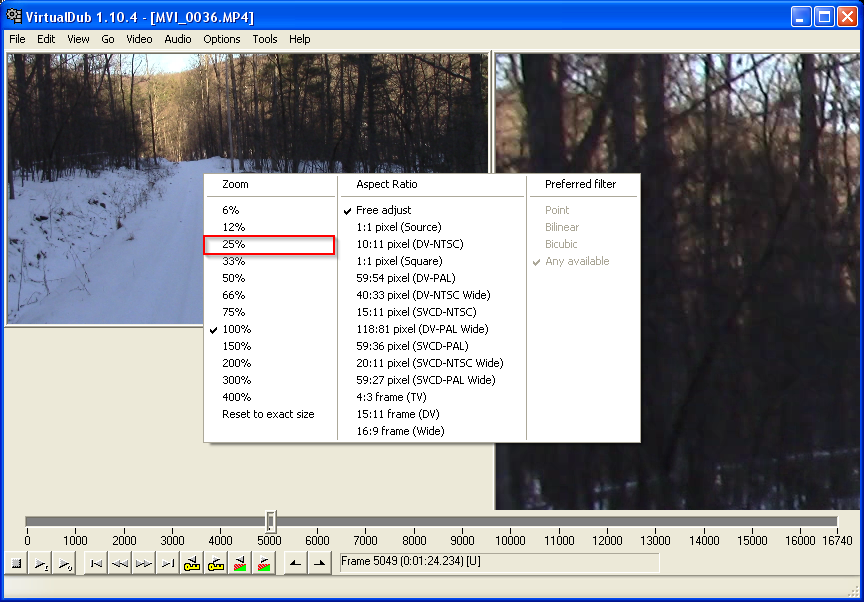 |
| Resizing the right video window. |
 |
- Click File > Save as AVI.
- If you receive the error "source image format is not acceptable", see here.
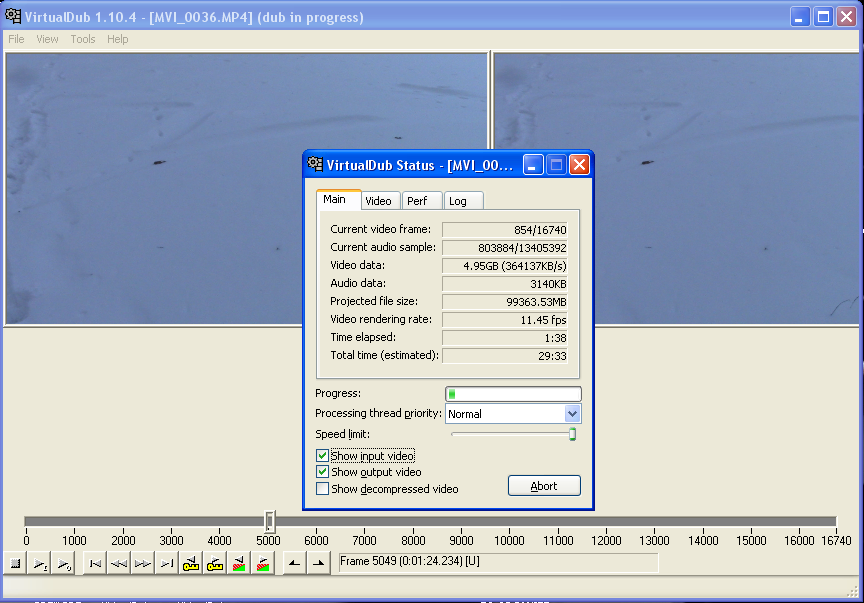 |
| Video dub in progress, converting from 16:9 to 4:3. |
There you have it, a quick and easy way to alter the aspect ratio of a video clip. I hope you've found this quick tutorial useful!
Monday, January 27, 2014
Behind-the-scenes in the early days of Star Trek: TNG
Since I haven't posted lately (I have several new articles in the works), here's an interesting (but brief) look at the production of TNG in its first season. This segment aired in 1988 as part of the children's TV show 'Reading Rainbow', hosted by none other than LaVar Burton. This is considered one of the first behind-the-scenes features about the then-new series.
Thursday, January 9, 2014
ST: Phase II dives headfirst into Klingon politics in' Kitumba'

The present incarnation of Phase II (formally New Voyages) isn't on TV, but instead is a long-running web series, one of the first mainstream fan productions to hit the cyberwaves. Starring James Cawley as Kirk and produced by the Cawley Entertainment Company, Phase II has since turned into one of the most highly-regarded fan productions on the web.
What does the aborted Phase II TV project have to do with all this? One of the Cawley's goals is to produce scripts written for the aborted series. Two such episodes have already been released, in addition to five original stories and three vignettes (all of which can be downloaded here).
Phase II's most recent episode is 'Kitumba', a Klingon-centric show originally written by John Meredyth Lucas. Had it been produced in the '70's, 'Kitumba' would have established a very different culture for our favorite galactic warriors than what was later created for TNG.
'Kitumba' takes us to the heart of the Klingon Empire where Kirk and the Enterprise must convince the Empire's new, teenage ruler to stop a war with the Federation. The conflict could lead to mutual destruction for both sides, but is it the Emperor's war to stop?
This latest installment from Phase II does a nice job of bridging the gap between Original Series Klingons and their Next Generation counterparts. Not only does the show neatly tie up lose ends and unanswered questions, but also gives us a peek at Klingon politics and society in the 23rd century (something TOS was never able to do). 'Kitumba's many (subtle) tie-ins and references to other episodes also help it to fit almost seamlessly into established cannon.
As always, the production values and overall quality are very high. The CG effects shots (and there are quite a few of them) are top-notch and the acting, for the most part, very respectable. The show really does resemble a professionally-produced TV episode, clearly going to great lengths to get all the details right.
For those James Cawley fans out there, you may be sad to learn that this is his final appearance as Captain Kirk before turning the reigns over to actor Brian Gross. After playing the part for over 10 years, Cawley has decided to focus on the production aspects of the project, leaving the center seat to a new Kirk.
In a second notable change, Phase II will soon be transitioning to a refit version of the Enterprise, a stepping stone, transitory design to what was finally shown in The Motion Picture (see the vignette 'Going Boldly'). The redesigned ship was originally a facet of the '70s Phase II, and has been retained with virtually no changes. The interiors of the ship, however, will remain the same.
I have no way of knowing how close to the original story this episode turned out, but 'Kitumba' is a solid episode in its own right and definitely worth checking out. The show can currently be viewed on YouTube or downloaded via the Phase II site.
Phase II's next regular episode, 'The Holiest Thing', will premiere on February 14th.
Tuesday, January 7, 2014
Tech Tutorial: Printing from your Android Device

In this day and age of mobile technology, everyone seems to do more on the go rather than at their desk. Why not take that a step farther and print from your Android tablet or phone to that printer on your desk?
The concept of cloud printing isn't a new one, but has only come into widespread use in recent years. Printers with wireless capability allow anyone connected to that printer to produce a hard copy of almost any document, email, or web page, regardless of whether you're two feet away or anywhere on the planet. One of the best ways to go about this is using Google Cloud Print. Not only does this service support printing to any cloud-aware printer from almost any computing device, but also printers that are not wireless-capable or networked.
This article assumes that your printer supports cloud printing, has wireless capability, and is already configured. This process was tested using an HP printer.
What You Need:
- A wireless printer that supports cloud printing
- An Android device
- A Google account
The Process:
There are plenty of apps in the Play Store designed to provide printer support, but many you have to pay for. Google Cloud Print, on the other hand, is totally free and works with most applications.
The most current version of Android includes Google Cloud Print, so it's merely a matter of configuring the app for your specific printer.
Wireless-enabled printers usually have an email address that allows documents to be mailed directly to the device for printing (as an alternative to using cloud print services). This address also acts as your printer's identifier over the Internet.
Wireless-enabled printers usually have an email address that allows documents to be mailed directly to the device for printing (as an alternative to using cloud print services). This address also acts as your printer's identifier over the Internet.
- Go to the Google Cloud Print webpage to determine if your cloud-enabled printer is compatible.
- HP users need not worry as all HP ePrint printers are compatible with this service.
- Log into to your Google account.
- If you wish to configure printing for multiple Google accounts, simply set each one up individually using these same steps.
- Using your printer's web interface, front display panel, or documentation, locate the device's email address.
- Note that your printer manufacturer may require you to register your printer with them before the email address is made active.
- On the Cloud Print webpage, follow the prompts to register the address using your mobile device.
- Note that doing this from a device other than the one you wish to print from will configure that device for cloud printing.
- Print a test page to make sure configuration was successful.
- Google Cloud Print will give you this option after setup is complete.
- Test print from other apps (such as your browser, office suite, email client, etc.) to confirm that they've been properly configured as well.
- Your wireless printer should now appear under your app's print screen.
- For some apps, it may be necessary to manually select the Cloud Print option, as your mobile device may default to other print methods.
- If your device has the HP Print Service Plugin preinstalled, it can be disabled under Settings > System > Printing > HP Print Service Plugin.
 |
| The Google Cloud Print screen on a desktop web browser. |
A note on privacy: as with any cloud-based application, you run the (small) risk of your documents being viewed by others who may intercept the print request. This chance is greatly reduced by the fact that all print requests are encrypted via HTTPS. In addition, Google keeps a copy of your document for a brief time to ensure the print went through properly, but this is deleted from their servers afterward.
If you have privacy concerns, I'd recommend using a local printer (that is, one that's only accessible by a directly-connected computer or over a home network) for documents containing personal or confidential information.
I hope you've found this tutorial useful in getting Google Cloud Print configured on your mobile Android device.
Tuesday, December 24, 2013
Happy Holidays from the Enterprise Bridge!
With the big day coming up tomorrow, I just wanted to wish all of you out there in cyberspace a very Merry Christmas and a Happy New Year! This is my final post for the year, so a huge thank you for dropping by and checking out my blog! If you like what you see here, please take a moment to share this site with your friends and help me build up that reader base :-)
Enjoy the holiday, stay safe out there, and see you all in the new year!
Enjoy the holiday, stay safe out there, and see you all in the new year!
Tuesday, December 3, 2013
LG840G: a solid semi-smartphone from Tracfone Wireless
Looking for a solid, inexpensive phone, but don't want to deal with those pesky contracts? Tracfone has you covered.
 Although the LG840G is far from being a new device, it's the latest in Tracfone's efforts to modernize their phone selection. A bit of a cross between a standard feature phone and a (very) low-end smart phone, the 840G packs some interesting features that puts it above all others in Tracfone's lineup. Like one YouTube reviewer put it, "this phone is the leading edge of the trailing edge of cell phone technology."
Although the LG840G is far from being a new device, it's the latest in Tracfone's efforts to modernize their phone selection. A bit of a cross between a standard feature phone and a (very) low-end smart phone, the 840G packs some interesting features that puts it above all others in Tracfone's lineup. Like one YouTube reviewer put it, "this phone is the leading edge of the trailing edge of cell phone technology."
Costing just under $20 USD reconditioned (or up to $60 USD new), the 840G features a 3.2-inch compacitive touchscreen, 3G/wi-fi connectivity, Bluetooth capability, a 2 GB micro-SD card, and triple minutes for life.
Update: at the time of this writing, the 840G was the best Tracfone had to offer. Very recently, they made available two full-fledged Android smartphones, the ZTE Valet ($99.99 USD) and the Samsung Galaxy Centura ($129.99 USD). Other newly-released smartphones, such as the LG Optimus, are only available through select online retailers such as QVC or HSN. I was wondering when Tracfone would start releasing 'real' phones -- I guess I have my answer...
Appearance & Build Quality
The 840G is definitely one of the more solid Tracfones I've used. It's somewhat heavier than the 800G, but only slightly larger in dimensions. In contrast to the 800G's rounded corners (which make the phone fit nicely in the hand), the 840G is much more rectangular with 'sharp' edges. The battery cover is made of a cheaper plastic and snaps (rather than slides) into place. Even so, after being locked into place, it doesn't at all feel flimsy and can't easily pop off.
There are only two physical buttons, the volume rocker switch (left side), and the power/lock button (top). A standard 3.5 mm headphone jack is also on the top of the phone, with the charging port on the bottom. The 840G really does look and feel like a small smartphone, and could easily pass for one at a distance.
The Screen
The compacitive touchscreen is light-years ahead of the resistive display on the 800G. It's much more responsive and can be used with a light touch. Considering the screen's low resolution, the display is bright, clear, and easy to read. The overall larger display allows for much easier use of the on-screen QWERTY keyboard, although people with big fingers may still have trouble.
The Camera
The 840G's camera is a fairly standard low-end camera phone, maxing out at 2 megapixels. It's not a great 2 megapixels at that, but it works fine as a backup or I-don't-have-a-real-camera camera. It doesn't appear to be as sensitive to movement as the 800G's camera is -- the 800G camera would constantly blur with the slightest movement. I've yet to test the phone's video capability.
Internet Connectivity
The 840G is the first Tracfone to come equipped with both 3G and wi-fi internet. This puts the 840G into the realm of 'semi-smartphone'. Is it a good web-surfing platform? Not really, but for the basics, it works fine.
Wi-fi access is totally free, but surfing at 3G speeds will quickly eat up your airtime. The included web browser is pretty basic and doesn't handle complex sites very well. This can be remedied by installing Opera Mini, a portable version of the Opera desktop web browser.
The phone also comes with an email client, but I haven't had any luck getting it to work properly. On the other hand, the generic social networking app seems to work fine for Facebook, and even allows for photo uploads. If that's not enough, the phone supports most Java-based apps.
Battery Life
Under light use, the phone will last about a a week before the battery dies. Beware that if wi-fi is turned on, the battery will drain in half that time. Also keep in mind that when the battery is low, the phone doesn't give much warning, so charging proactively is probably a good idea.
Operating System
Althouth the 840G looks like an Android smartphone, it runs a stock LG phone operating system, featuring three home screens (contacts, widgets, & app shortcuts) and an app tray. It's very similar to the one on the 800G, but with some marked improvements. Overall, the OS is very easy to navigate, especially for former 800G users. Even Android users will (more-or-less) feel right at home. Needless to say, it's not nearly as flashy as Android or iOS, but it's solid and functional.
Update: at the time of this writing, the 840G was the best Tracfone had to offer. Very recently, they made available two full-fledged Android smartphones, the ZTE Valet ($99.99 USD) and the Samsung Galaxy Centura ($129.99 USD). Other newly-released smartphones, such as the LG Optimus, are only available through select online retailers such as QVC or HSN. I was wondering when Tracfone would start releasing 'real' phones -- I guess I have my answer...
Appearance & Build Quality
The 840G is definitely one of the more solid Tracfones I've used. It's somewhat heavier than the 800G, but only slightly larger in dimensions. In contrast to the 800G's rounded corners (which make the phone fit nicely in the hand), the 840G is much more rectangular with 'sharp' edges. The battery cover is made of a cheaper plastic and snaps (rather than slides) into place. Even so, after being locked into place, it doesn't at all feel flimsy and can't easily pop off.
There are only two physical buttons, the volume rocker switch (left side), and the power/lock button (top). A standard 3.5 mm headphone jack is also on the top of the phone, with the charging port on the bottom. The 840G really does look and feel like a small smartphone, and could easily pass for one at a distance.
The Screen
The compacitive touchscreen is light-years ahead of the resistive display on the 800G. It's much more responsive and can be used with a light touch. Considering the screen's low resolution, the display is bright, clear, and easy to read. The overall larger display allows for much easier use of the on-screen QWERTY keyboard, although people with big fingers may still have trouble.
The Camera
The 840G's camera is a fairly standard low-end camera phone, maxing out at 2 megapixels. It's not a great 2 megapixels at that, but it works fine as a backup or I-don't-have-a-real-camera camera. It doesn't appear to be as sensitive to movement as the 800G's camera is -- the 800G camera would constantly blur with the slightest movement. I've yet to test the phone's video capability.
Internet Connectivity
The 840G is the first Tracfone to come equipped with both 3G and wi-fi internet. This puts the 840G into the realm of 'semi-smartphone'. Is it a good web-surfing platform? Not really, but for the basics, it works fine.
Wi-fi access is totally free, but surfing at 3G speeds will quickly eat up your airtime. The included web browser is pretty basic and doesn't handle complex sites very well. This can be remedied by installing Opera Mini, a portable version of the Opera desktop web browser.
The phone also comes with an email client, but I haven't had any luck getting it to work properly. On the other hand, the generic social networking app seems to work fine for Facebook, and even allows for photo uploads. If that's not enough, the phone supports most Java-based apps.
Battery Life
Under light use, the phone will last about a a week before the battery dies. Beware that if wi-fi is turned on, the battery will drain in half that time. Also keep in mind that when the battery is low, the phone doesn't give much warning, so charging proactively is probably a good idea.
Operating System
Althouth the 840G looks like an Android smartphone, it runs a stock LG phone operating system, featuring three home screens (contacts, widgets, & app shortcuts) and an app tray. It's very similar to the one on the 800G, but with some marked improvements. Overall, the OS is very easy to navigate, especially for former 800G users. Even Android users will (more-or-less) feel right at home. Needless to say, it's not nearly as flashy as Android or iOS, but it's solid and functional.
If you're looking for a cheap phone that does all the basics plus a few extras, check out the LG840G. It may not be cutting edge, but it's more than sufficient for any Tracfone user.
Tuesday, November 19, 2013
Europa Report: a highly-satisfying, slow-building space thriller

The near-future. A privately-funded, international team of astronauts set off on a mission to search for life on Europa, Jupiter's largest moon. Despite a systems failure that leaves the spacecraft out of communication with Earth, the mission goes on, leading to a surprising discovery. But at what cost?
Told in found-footage style, the film is a pretty convincing look at what a real-life, deep space mission might look like. To my knowledge, this is the first movie to capitalize on the possibility of life on Europa, something that's long been believed but never confirmed. Is Europa Report a bit science-heavy? Yes. Is it slow-moving? Yes. Is it a horror movie about evil aliens on a distant world? Most definitely not. Instead, Europa Report is more of a chilling 'what-if' film that leaves you wondering about the possibilities.
Almost all the footage is shot using wall-mounted or hand-held cameras, interspersed with earth-based scenes of scientists later analyzing the mission. This aspect really adds to the movie's feeling of 'authenticity', since no real space mission has room for a full-fledged camera crew. In true found-footage style, Europa Report doesn't really feel like a movie, but instead like a collection of roughly-edited clips from the ship's data recorders chronicling the mission. It's not fancy, but it gets the job done.
Despite the movie's modest budget, the special effects are more than adequate. The visuals aren't quite on-par with other sci-fi films that have come out recently, but fit the context of this movie well. It's nice to see a movie that's not so heavily reliant on special effects for a change -- that's obviously a major trend lately, but would have ruined the 'feel' of the film had it been done that way.
Verdict: Europa Report is a very well done and scientifically intriguing movie, much more so than what I was expecting from a (fairly) low-budget production. It's especially worth checking out for those of you who want to put the 'science back in science fiction', or are looking for a more realistic portrayal of near-future space exploration. In addition, fans of 2001: A Space Odyssey and 2010: The Year We Make Contact will feel right at home with the movie's pace and feel.
I'd love to see something like this happen for real someday, but for now, we'll all just have to settle for films like Europa Report. Don't miss it!
Wednesday, November 13, 2013
Ender's Game: a worthy adaptation of a classic tale?

"This is not a game."
Set a century in the future, an unusually brilliant young man, Andrew 'Ender' Wiggin, is recruited and trained to lead Earth space forces in a final battle against an alien race.
For those of you unaware, Ender's Game is based on the 1984 military sci-fi novel of the same name by author Orson Scott Card. The highly-successful book spawned several sequels following Ender's later exploits as an adult. These dealt with the ramifications of Ender's actions in the original novel and his taking on the role of 'speaker for the dead'. I was originally introduced to the series by my seventh grade English teacher, and after a pretty long hiatus, I started re-reading them in anticipation of this movie. If you're looking for something new to read with really well-developed characters and a highly-engaging story, check out this series.
As far as book adaptations go, Ender's Game is surprisingly close to its source material -- it probably helped that the original author co-produced the film, but even so, it's unusual to find 'good' adaptations of even the best novels. For example, for those of you familiar with Burroughs' classic novel A Princess of Mars and it's recent Disney film adaptation, you know what I mean.

Aspects of the story such as Ender's time at the Battle School is (somewhat) glossed over in favor of focusing on the latter half of the novel. Other elements, like Ender's empathy for the alien queen and his relationship with Valentine, are only touched on. The book's Earth-based sub-plot involving Valentine and Peter's political writing endeavors and Peter's rise to power are completely absent. There are others, but suffice to say, it's impossible to fit a few hundred pages worth of material into a one two-hour movie. Overall, the producers did a decent job of finding compromise.
Like many sci-fi movies this year, Ender's Game is pretty special effects-heavy. Although the story involves very little space travel, much of the computer technology talked about in the book was updated for a 21st century audience and looks quite stunning. The film, for instance, replaces references to dots on a radar screen (in the simulator scenes) to completely immersive holographic displays controlled by hand movement. This was clearly an excuse to show off cool starship designs and space combat, but I'm definitely not complaining. It's unfortunate this movie wasn't released in 3-D since the visuals could have benefited from it.
If you're looking for a sci-fi action film, Ender's Game probably isn't for you. On the other hand, if you're a fan of the book series or like military sci-fi films, definitely check out this movie. It's taken nearly 30 years, but we finally have a fairly solid, big-screen adaptation of this classic tale and a good sci-fi film in its own right.
Subscribe to:
Posts (Atom)